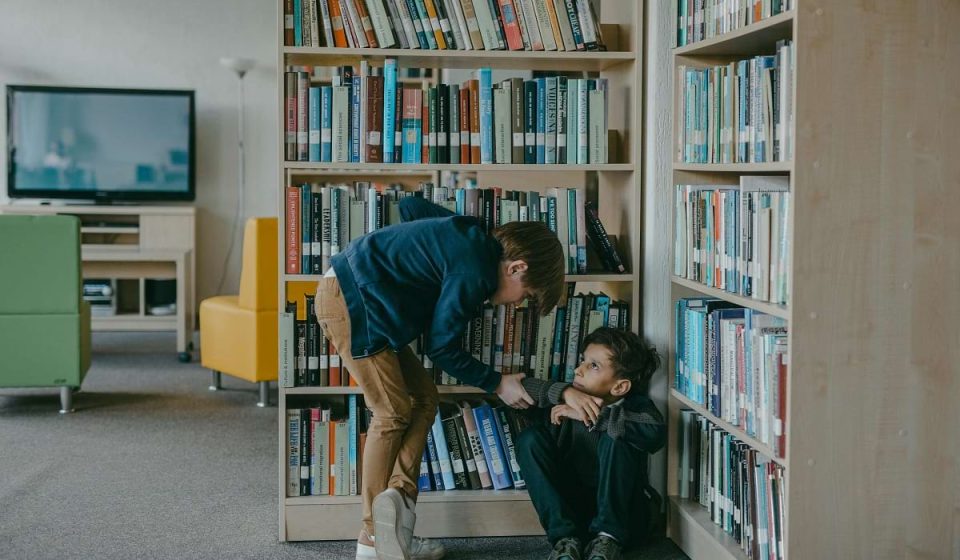
My child is bitten or hit at daycare: what can you expect?
You pick up your child from daycare and during the transfer you hear: "Something happened today. Your child was bitten." Or: “Another child hit.” You may only notice a mark, a scratch, a bruise or that your child is reacting differently than normal at home.
Then you're shocked. Naturally. Because even though you know somewhere that young children still have to learn to deal with emotions, boundaries and frustration: when it concerns your child, it immediately feels different. You want to know what happened. Whether your child has been in pain. Whether it happens more often. And above all: what does the daycare do to ensure that your child feels safe?
At the same time, it is good to realize that such an event cannot only take place in childcare. Children can also hurt, bite, hit, push or exclude each other at school, at a sports club, during swimming lessons, on a play date, in the playground or in another place where children gather. Where children play and learn together, clashes sometimes arise.
That doesn't make it any less Annoying. but it does put it in perspective: it is not just about the place where it happens, but especially about how adults respond, guide and ensure safety.
In this article you can read what can be normal in the development of young children, what you can expect from childcare and what questions you can ask as a parent if your child has been bitten, hit, pushed or scratched at daycare.
Biting, hitting and pushing: intense for parents, but not always exceptional
Unfortunately, biting, hitting, pushing, scratching or taking things is common in young children. Not because a child is “bad”, but because young children are still learning.
A toddler or toddler does not always have the words to say:
- “I want that toy.”
- “I'm angry.”
- “You're standing too close to me.”
- “I'm tired.”
- “I don't know how to play along.”
Sometimes that frustration comes out physically. A child bites, pushes, hits, scratches or pulls hair. For the child who does this, it is often impulsive. It can of course be very unpleasant for the child it happens to.
This type of behavior is not unique to childcare. A child may also encounter another child who crosses boundaries at school, at the football club, during swimming lessons, at a birthday or in the playground. The difference is that with childcare you have to deal with professional guidance, pedagogical policy and agreements about how incidents are discussed and followed up.
That is precisely why you, as a parent, can expect that the situation will be carefully examined.
An incident does not automatically mean unsafe shelter
If your child has been bitten or hit, as a parent you can Quickly think: “Was there enough supervision?” Or “Is this shelter safe?” That's understandable. however, One incident does not automatically mean that the shelter is unsafe.
In a group with young children, something can sometimes happen in a few seconds. A child takes a toy, another child gets scared, gets angry or becomes overstimulated, and before a pedagogical professional arrives, someone has already bitten or pushed.
This can also happen on a schoolyard, at a sports club or in another place where several children play at the same time, or simply at home. No environment where children gather is completely free from collisions.
What really matters is what happens next:
- Is your child comforted?
- Is the incident taken seriously?
- As a parent, do you receive clear explanations?
- Does the shelter look at possible causes?
- Are agreements made if it happens more often?
Good care does not promise that nothing will ever happen. Good childcare shows that it is alert, guides children and carefully informs parents.
What can you expect from childcare?
If your child is bitten, hit, pushed or hurt in any other way, you can expect the childcare center to take this seriously.
This does not mean that every incident can be completely Prevented. but it does mean that the shelter looks further than Just: “It happened.”
You can expect that pedagogical professionals:
- comfort and care for your child;
- see what exactly happened;
- calmly restrain the other child;
- make it clear what behavior is not allowed;
- searching for the cause or reason;
- record the incident according to the organization's policy;
- inform you honestly as a parent;
- repeatedly take additional measures.
The latter is especially important. One bite or hit is different from a recurring pattern. If the same behavior occurs more often, or if your child is a victim more often, you can expect the daycare center to act actively.
Consider extra observation, agreements within the team, more proximity at risk moments, guidance for the child who bites or hits, and clear communication with the parents involved.
Are you allowed to know which child bit or hit your child?
This is one of the questions parents have most often.
You may want to know:
- “Was it always the same child?”
- “Is it an older child?”
- “Have the parents of that child been informed?”
- “Why don't they tell me who it was?”
That need is understandable. As a parent you want overview and Control. however, a childcare center will usually not simply share the other child's name.
This has to do with privacy and care. A childcare center not only has a responsibility towards your child, but also towards the other child and their parents. The privacy legislation also applies to childcare organizations. They must handle personal data of children and parents with care.
That can feel frustrating. However, it does not mean that the shelter is not allowed to say anything.
You may ask:
- “What exactly happened?”
- “Was there a reason?”
- “Where were the pedagogical staff?”
- “Has this happened before?”
- “Do you see a pattern?”
- “What are you doing to prevent a recurrence?”
- “When will you provide feedback on whether things are improving?”
The shelter does not always have to mention a name to inform you seriously and completely.
Why does the shelter sometimes not say everything?
It can feel to parents as if the daycare is withholding information. Especially if your child has been in pain, you want to know everything. However, a daycare must be careful with information about other children.
For example, a pedagogical professional cannot simply say: “It was this child, and that child does this more often.” This would mean that the shelter would share information about another child, while that child and its parents also have the right to privacy.
What the shelter can do is explain the situation and the approach. For example:
“For privacy reasons, we cannot share which child it was, but we can tell you what happened, how we responded and what agreements we are making to prevent a recurrence.”
That is often a good balance: careful towards all children, but clear towards you as a parent.
When is it a concern?
Not every incident means that there is something wrong with the shelter. Young children are still learning. A bite, blow or push can happen, even in a group where there is good supervision.
But there are situations in which you as a parent can be extra alert.
For example if:
- your child is bitten or hit several times;
- your child becomes afraid to go to daycare;
- your child shows noticeably different behavior at home;
- you always get little explanation;
- the shelter plays down the incident;
- there is no clear plan repeatedly;
- your child is always hurt by the same child;
- you feel that there is insufficient supervision;
- you don't know who to contact with your concerns.
A sentence like “that's part of it” can sometimes be true, but is not enough if something happens more often. Then as a parent you want to hear: “We see it, we take it seriously and this is what we are going to do.”
What can you ask as a parent after an incident?
It helps to ask your questions calmly and specifically. Not because you are not allowed to have emotions, but because you gain clarity more quickly if you ask for facts, patterns and next steps.
1. Can you explain what exactly happened?
Ask about the situation. Was it during free play? Outside? At the table? When grabbing toys? During a busy moment of transition?
2. Was there a reason?
Sometimes biting or hitting arises from frustration, fatigue, overstimulation, jealousy or a fight over toys.
3. Is this the first time or have you seen this before?
With this you are not asking for the name of another child, but for the pattern.
4. What do you do to help my child feel safe again?
That's important. It is not just about the child who bit or hit, but also about your child.
5. What agreements do you make in the team?
Repeatedly, you can expect pedagogical staff to look together at what is needed.
6. When do we discuss how things are going?
Ask for a feedback moment. For example, after a few days or a week.
What should you not do?
As a parent you want to protect your child. That makes sense. Still, there are a few things that usually don't help.
- Don't try to find out which child it was yourself.
- Do not speak angrily to another child.
- Don't speculate via other parents in a group app.
- Do not post accusatory messages in the parent app.
- Don't ask your child for details again and again if it makes him or her nervous.
Young children in particular cannot always retell events accurately. Sometimes memory, feeling and fantasy are intertwined. That doesn't mean you shouldn't believe your child, but it does mean that you should be careful with conclusions.
It is better: take your child seriously, ask open questions and discuss your concerns with the childcare provider.
For example:
“You say you were in pain. That's bad. I'm going to talk to the teacher to ask what happened.”
This way you give your child safety without increasing the tension.
How do you talk to your child after biting or hitting at daycare?
You don't need to question a young child in detail. Closeness is often more important than talking a lot.
You can say:
- “That was scary, wasn't it?”
- “Bite hurts.”
- “Hitting is not allowed.”
- “The pedagogical employee helped you.”
- “You can say: stop, i don't want that.”
- “If something happens, you can always ask for help.”
With toddlers and preschoolers you can practice with short sentences:
- "Stop."
- "No."
- “I don't want that.”
- "Help."
- “I was playing with that.”
Don't make your child responsible for preventing another child's behavior. A child does not have to deal with being bitten or hit on his own. But it can help if your child is given words to indicate boundaries.
And what if your child is the one who bites or hits?
That can happen too. And that can be just as painful for parents. You may feel ashamed. You're shocked. You wonder if other parents are watching you. maybe you Are afraid that your child will be considered A “problem child”.
Yet this also applies here: young children are still learning. Biting or hitting requires clear boundaries, but also understanding what is behind it.
Ask the shelter:
- “When does it mainly happen?”
- “Is my child tired, overstimulated or frustrated?”
- “Does it happen with certain toys or certain times?”
- “Which words can we practice at home?”
- “How do you respond to the group?”
- “What can we do in the same way at home?”
It helps if home and day care use the same language. For example:
"Biting is not Allowed. biting hurts. Just say: stop."
Or:
“Hitting is not allowed. You are allowed to be angry, but you are not allowed to hit.”
A child learns most from repetition, rest and clarity.
What if the shelter says: “It's part of it”?
Sometimes employees say: “That comes with age.” That may be true, but it may also feel too short-sighted.
A better response from the shelter would be:
“Biting can occur at this age, but we take it seriously. We look at what caused it and how we can prevent recurrence.”
As a parent you are welcome to ask further questions.
For example, say:
“I understand that it can happen, but I would like to know what you are doing specifically to keep my child safe.”
Or:
“I understand that toddlers are still learning, but because it happens more often now, I would like to see together what is needed.”
This way you remain calm, but make it clear that you expect more than just reassurance.
What if it doesn't happen at childcare, but at school or sports?
Although this article is mainly about childcare, similar situations can also arise in other places. Think of school, a sports club, swimming lessons, scouting, a birthday, a play date or the playground.
The basic questions then actually remain the same:
- What exactly happened?
- Was there supervision?
- How was my child cared for?
- Has the other child been spoken to or guided?
- Does this happen often?
- What agreements are made to prevent recurrence?
The difference is mainly in the role of the organization. A childcare center has professional pedagogical staff, pedagogical policy and formal agreements about safety, communication and complaints. This may be arranged differently at a sports club or play date.
Yet it applies everywhere: children need adults who respond calmly, set boundaries and help fix what went wrong.
When do you file a complaint?
Usually the first step is a conversation with the pedagogical professional or location manager. There is often a lot of peace when you hear clearly what happened and what steps the shelter is taking. But sometimes you can't figure it out. For example, if you do not receive clear feedback, if incidents keep happening, or if you feel that your concerns are not being taken seriously.
Every childcare organization must have a complaints procedure. It explains how you as a parent can submit a complaint and how the organization deals with it. Filing a complaint does not necessarily mean “tough against hard”. Sometimes it is a way to gain clarity, agreements and improvement.
If you cannot reach an agreement with the childcare organization, you can request information and support from the Childcare Complaints Desk. In certain situations, a complaint can ultimately also be submitted to the Childcare Disputes Committee.
Sample email to childcare
Do you find it difficult to put your concerns into words? For example, you can send this:
Topic: Concerns after incident at the group
Dear [name],
When I picked him up I heard that [child's name] was bitten/hit/pushed by another child today. I understand that this can happen to young children, but it scares me.
I would like to get a little more clarity about what exactly happened and what you are doing to prevent this from happening again.
Could you please indicate:
- what the situation was;
- whether a reason or pattern is visible;
- how [name of child] was cared for afterwards;
- what steps you take within the group;
- when we can discuss what happens next?
Thank you in advance for the feedback. I think it is important that [child's name] continues to feel safe at daycare.
Yours sincerely,
What is a good shelter response?
Good childcare does not have to be perfect. Incidents can happen. But the way a shelter responds says a lot.
A good response is:
- honestly;
- calm;
- not defensive;
- concrete;
- careful with privacy;
- focused on safety;
- focused on collaboration.
As a parent you don't necessarily want someone to blame. You want to know that the shelter sees what is happening and takes action.
For example, a sentence that reassures many parents is:
“For privacy reasons we cannot share which child it was, but we can tell what happened, what we did and what agreements we make to prevent recurrence.”
That is clear and careful.
Frequently asked questions
Is biting at daycare normal?
Biting can occur in young children, especially toddlers. That doesn't mean it should be ignored. The daycare must look at the reason, guide the child and take additional measures if it occurs again.
Should the daycare center call me if my child has been bitten?
That depends on the severity of the incident and the organization's policy. In the event of a clear injury or major fright, direct contact is the obvious choice. For smaller incidents it can be discussed during the handover. Ask the shelter what policy they apply for this.
Can I know which child bit my child?
Usually the daycare will not share the other child's name for privacy reasons. You can ask what happened, whether there is a pattern and what measures are being taken.
What if my child is bitten or hit more than once by the same child?
Then you can expect the shelter to view this as a pattern. Ask for a conversation, concrete agreements and a moment of evaluation.
What if my child becomes afraid of daycare?
Take that seriously. Discuss it quickly with the pedagogical staff or location manager. Ask how they can give your child extra safety and confidence in the group.
What if my own child bites or hits?
Ask the shelter when it happens, what possible triggers are and how you can use the same approach at home and at the shelter. Shame is understandable, but cooperation will help your child the most.
Can this also happen at school, sports or other places?
Yes. Wherever children gather, clashes can occur. Think of school, sports, swimming lessons, play dates or the playground. And don't forget: at home! The most important question is always: how do the adults react, how is your child cared for and what agreements are made to prevent recurrence?
Finally: you can be concerned
If your child is bitten, hit or hurt at daycare, you may be shocked. You would probably do the same if it happened at school, at a sports club or in another place where children are together.
You don't have to get angry right away, but you don't have to wave it away either. Your child may notice that you listen, that you take it seriously and that adults work together to see what is needed. The best conversations often arise somewhere in the middle: with understanding for young children who are still learning, and with clear expectations for childcare.
Because ultimately every parent wants the same thing: that your child is safe, is seen and can go to daycare with confidence.
Resources and more information
- Expertise Center for Childcare – Biting better understood
- National government - What can I do with a complaint about my child's childcare?
- Childcare Complaints Desk – Complaints procedure
- BOinK – Privacy policy in childcare
- BOinK – Complaints Desk and the Disputes Committee
- The Disputes Committee – Childcare


